NexTech Bengaluru by 247VC
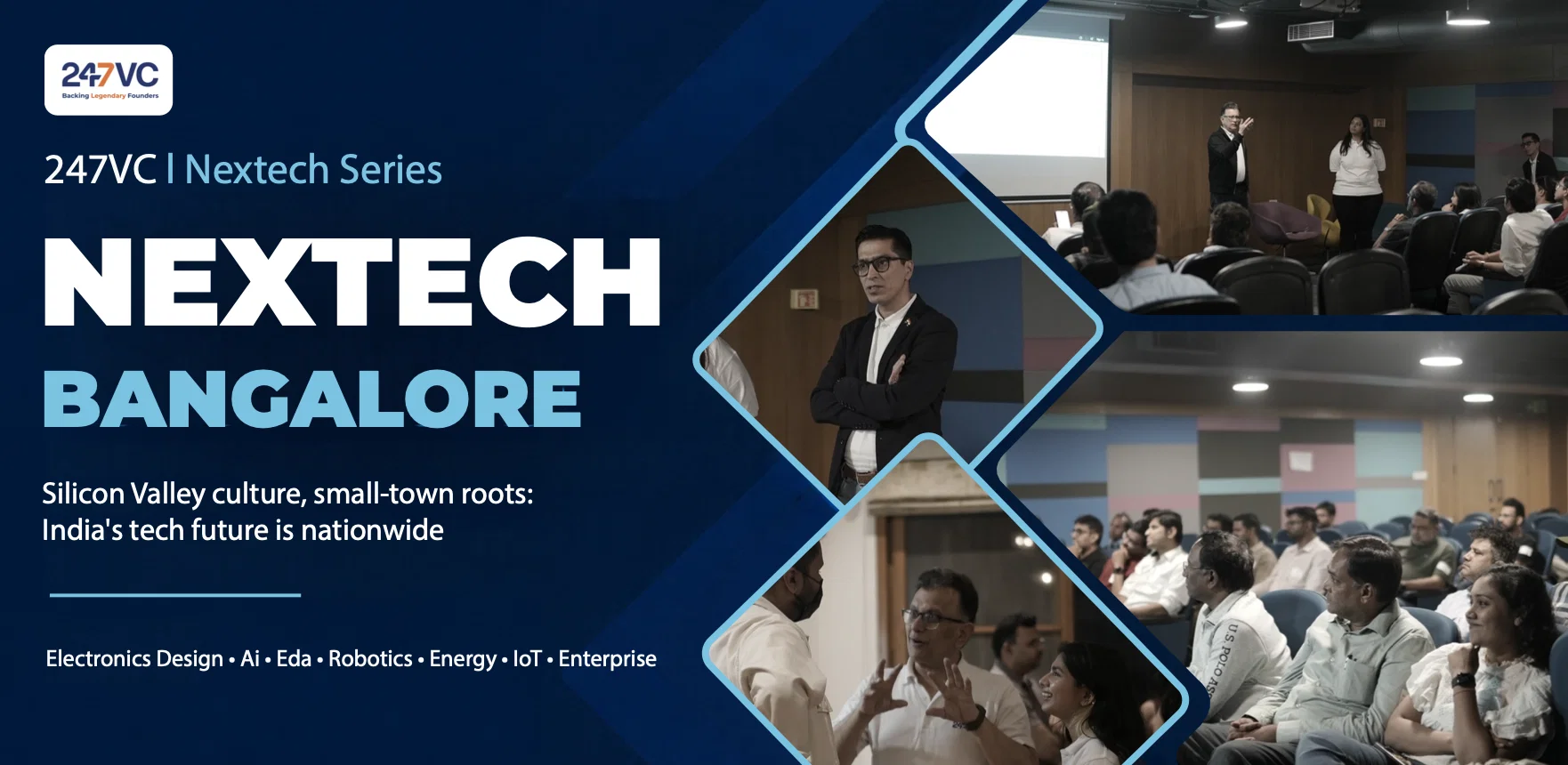
30 Shortlisted Founders. One Room. Questions Harder Than Any Pitch.
There are platforms where founders come to pitch. There are community meet-ups where founders come to network. And then there are rooms where a founder explains that his receiver has no antenna, that a sealed glass cell of rubidium vapour is doing the work, while the photonics founder two chairs away starts asking him about linewidth.
NexTech Bengaluru by 247VC was the third kind.
On 12th October, 247VC brought together a curated set of founders, researchers and CTOs building across quantum sensing, photonics, semiconductors, AI infrastructure, lending and industrial automation. The technologies were different. So were the markets, capital requirements and paths to commercialisation. What connected them was the difficulty of the problems they had chosen to solve.
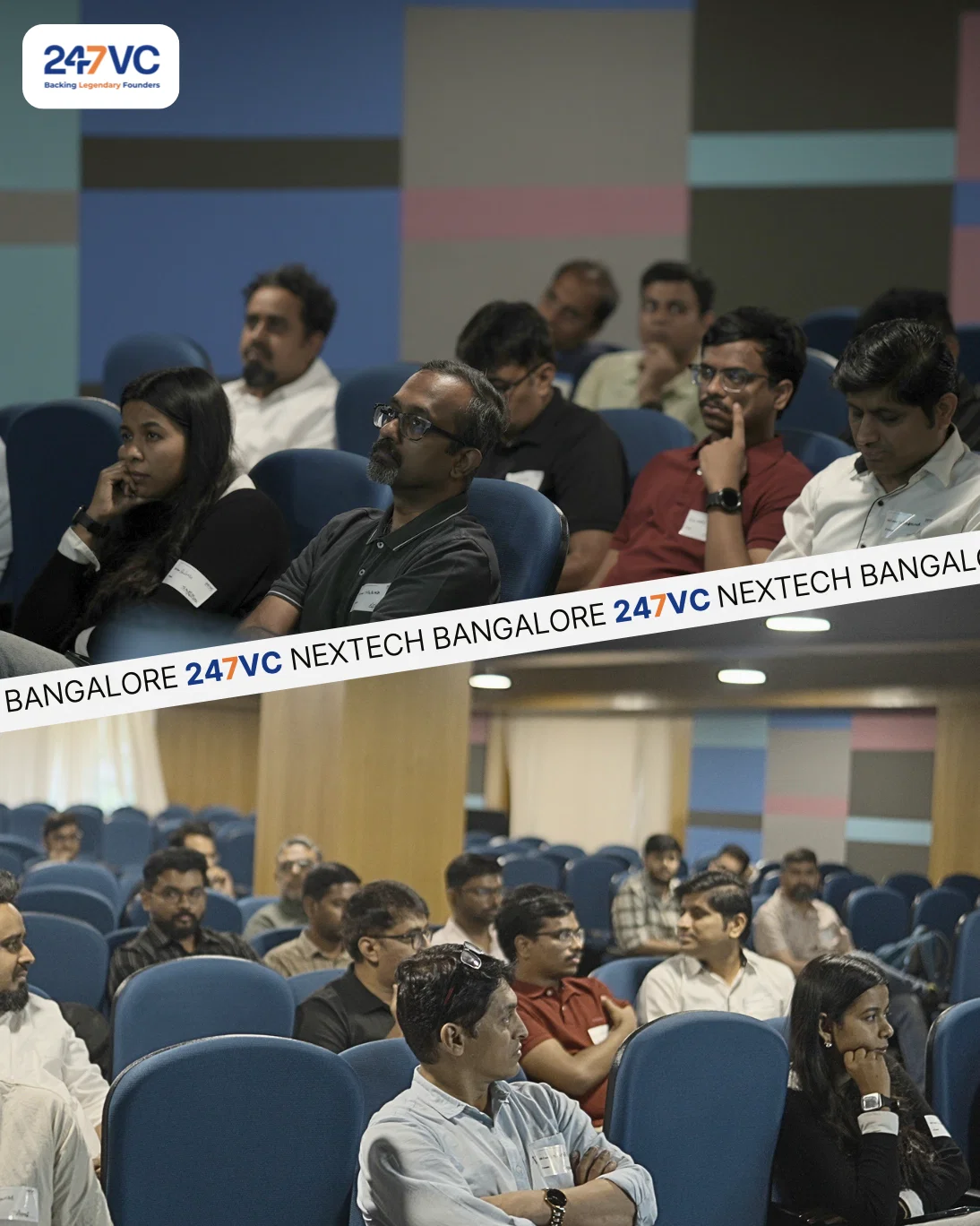
The founders in attendance were building across:
Defence: Rydberg atom electrometry, where the atom itself is the receiver and the calibration is a physical constant. One vapour cell covers a frequency span no piece of shaped metal can follow. Built for electronic warfare, direction finding and signals intelligence.
Photonics: Moving data with light, because every AI rack on earth is now limited by what it costs in watts to push a bit across a board. The waveguide is the easy part. Coupling fibre to chip ten thousand times without losing yield is not.
Semiconductors and silicon design: Indian design teams taping out real parts, with a clear view of who tests, who packages and who buys the first thousand units. The layers we argued for in Beyond Silicon, being built by people sitting in the room.
AI infrastructure and inference: Founders treating GPU time the way a factory treats machine hours. Utilisation, batching, idle cost, cold starts. Thermodynamics with a billing cycle attached.
Fintech, lending and credit infrastructure: Credit underwritten on cash flow data that did not exist in this country eight years ago. UPI trails, GST filings, invoice histories. A business with no balance sheet is finally legible.
MSME manufacturing and industrial automation: Founders selling into shop floors that count every rupee of capex and will not buy a pilot out of curiosity. The sharpest customer discipline in the room came from this group.
...and more across advanced manufacturing, defence-adjacent systems and enterprise infrastructure.
Consider the range of problems represented in the room. Problems statements discussed above were not interchangeable concepts. They demand different kinds of expertise, different capital requirements, and different routes to market.
But there are useful connections between them.
A founder building a hardware-intensive business has to think about qualification cycles, manufacturing readiness, and the customer willing to adopt a new technology first. An AI infrastructure founder faces a different technical stack, but may recognise the same underlying challenge: building something that performs reliably under real-world constraints, at a cost the customer can justify.
An MSME-focused founder may have lessons in distribution and customer adoption that a technically sophisticated founder needs just as much as another engineering breakthrough.
The opportunity is not to make every founder think alike. It is to put different kinds of expertise within reach of one another.
Themes emerging organically:
1. Many founders were building layers that other businesses would depend on
The Rydberg sensing system sits within a larger defence application. The photonic link supports a data centre. The chip enables downstream computing systems. The inference layer supports AI applications. Credit infrastructure helps an MSME finance its next purchase of inventory.
These are different businesses, but they share an important characteristic: their value often depends on how well they integrate into a larger system.
That creates an interesting challenge for founders. The technology may be highly differentiated, but customers still need to understand where it fits, what it replaces, and why adopting it is worth the effort.
Infrastructure businesses can be difficult to displace once deeply embedded. Getting embedded in the first place is often the harder part.
2. Hardware founders were talking about customers. AI founders were talking about physics.
We might have expected the hardware founders to focus primarily on technical specifications and the AI founders to focus on commercial applications. The conversations suggested a more complicated picture.
Quantum and photonics founders were discussing qualification timelines, testing requirements and purchase orders. AI infrastructure founders were thinking about power consumption, heat and memory bandwidth.The distinction between hardware and software becomes less useful when both must contend with physical constraints, deployment realities and the economics of delivering a working product.
A system can be technically impressive and still fail commercially if it cannot operate reliably, economically and at the scale its customers require.
3. Procurement can be as consequential as technical performance
For defence-adjacent technologies, getting a device to work is only one milestone.Trial windows, certification processes, procurement timelines and identifying the agency responsible for a purchase can all influence how quickly a company progresses. A technically successful demonstration does not automatically translate into an order.
For founders, this means understanding the buyer and the procurement pathway early, rather than treating commercialisation as something to figure out after the technology is ready.
For investors, it means evaluating not only whether a technology works, but also whether the company understands what it will take to get that technology adopted.
4. The most useful conversations happened across categories
The quantum founder and the photonics founder discovered a shared problem around laser supply. The inference founder's concerns about power consumption had parallels with those of manufacturing founders managing energy costs.
Hardware founders listened as the lending founder explained how an MSME evaluates capital expenditure.These conversations mattered because they connected people who approached problems from different starting points.
A founder does not always need another person working on the same technology. Sometimes, the most useful perspective comes from someone who has solved an adjacent problem in a completely different industry.
That is the value of bringing technically ambitious founders together without requiring them to fit into a single sector or category.
The evening is only worth it if people leave holding something they did not walk in with -
A founder finds a customer: A buyer with the exact problem, two chairs away.
A builder finds a collaborator: The quantum founder and the photonics founder had more to say to each other than either expected. It is the pattern we saw at NexTech Hyderabad, NexTech NCR and NexTech Noida: the most valuable conversations happen across categories.
Research finds a path to market: A lab result meets the company that can commercialise it. We know what that pipeline produces. Dream Aerospace, building India's first green chemical propulsion system, is taking its thrusters through flight qualification on a ₹10 crore round 247VC led. Here is why we invested.
Investor logic without the pitch theatre: How a seed fund that underwrites physics thinks about defensibility, capital intensity and timing. The long version is covered in our thesis, Frontier Deep Tech: Rewiring India.The right people, with the right context, at the right stage, asking the right questions.
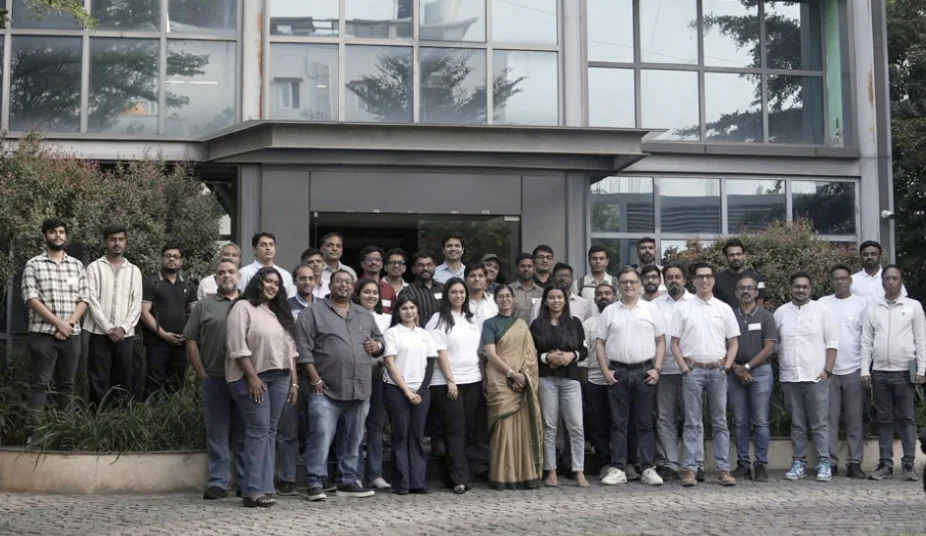
Mumbai | NCR | Bengaluru | More Cities
Bengaluru has no shortage of ambitious founders. What matters is creating the conditions for them to meet beyond the usual circles, disciplines, and networks.NexTech Bengaluru was another step towards that.
At 247VC, our role is to find founders early, understand what they are building, connect them to the people and resources that can help, and back the ones we believe can build enduring companies.
Showcase. Network. Fund.
If you are building in deep tech, advanced manufacturing, enterprise technology, AI infrastructure, or another space where the problem is difficult and the opportunity is meaningful, we want to hear from you.
Be part of our tech community of developers, CTOs, researchers and hardcore builders.
Interested to join the next NexTech? RSVP for your City