NexTech Noida with 247VC: Expanding the Geography of Indian Deep Tech
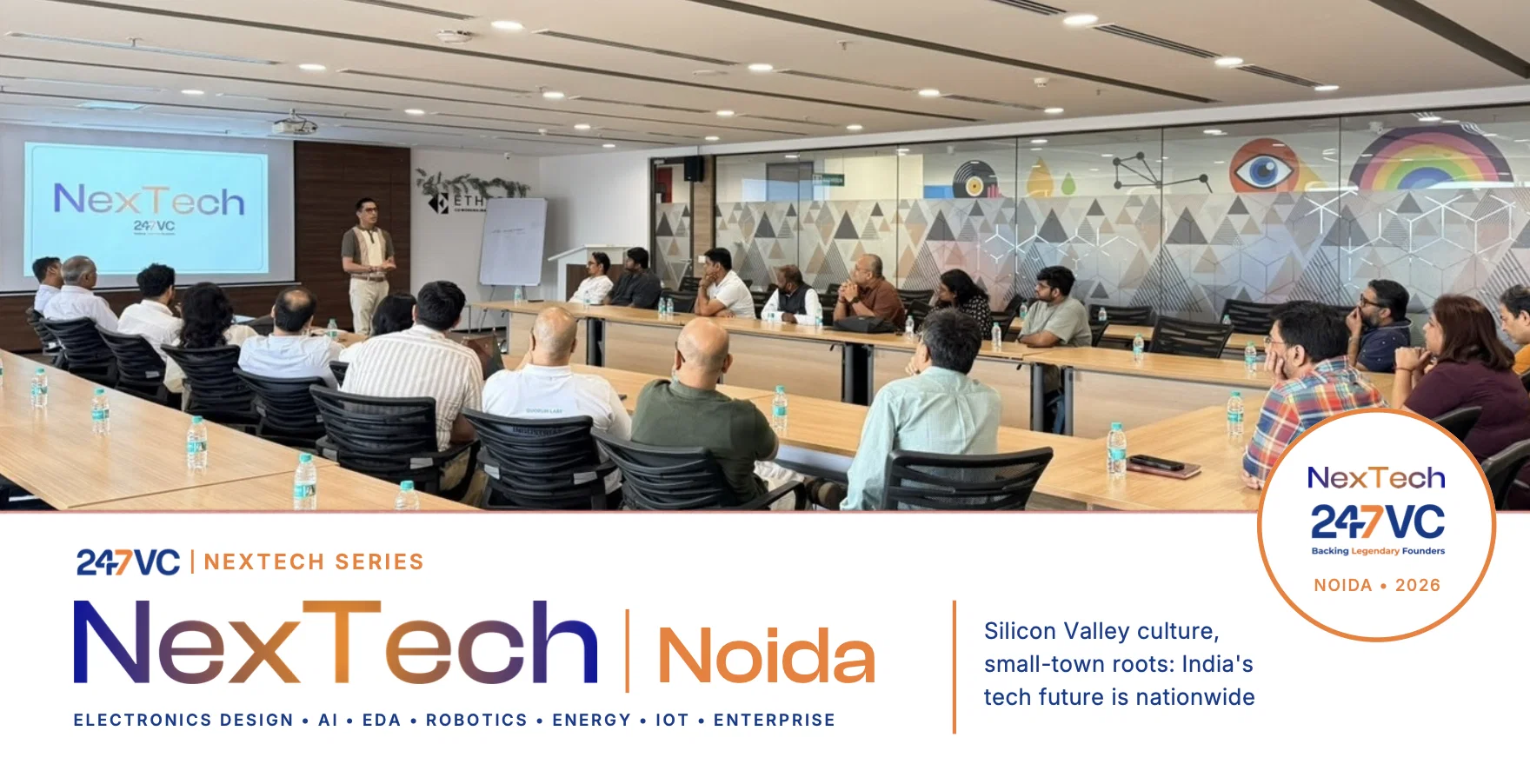
Thirty Shortlisted Founders. One Room. A Lot To Learn From Each Other.
There are platforms where founders come to pitch. There are community meet-ups where founders come to network. And then there are rooms where someone is explaining why their EDA (Electronic Design and Assessment) stack is solving a problem the semiconductor industry has ignored for twenty years, while a robotics founder is trying to figure out whether the same architecture can work at the edge.
NexTech Noida by 247VC was the third kind.
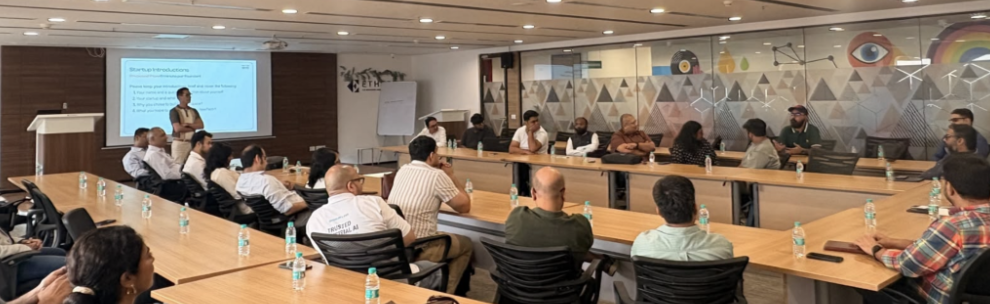
After screening 65 applications, we brought together 30 founders, researchers, CTOs building in different domains, facing various hurdles, very different technologies, but enough technical depth in one room to keep the conversation going long after the introductions were over.
Who Was In The Room
Deep tech founders outside the major clusters tend to build in silos. The lab is in one place, the policy desk in another, the capital somewhere else entirely, and none of them are in conversation with each other. 247VC’s NexTech put all of it at one table and assembled one of the most technically dense cohorts Noida has seen.
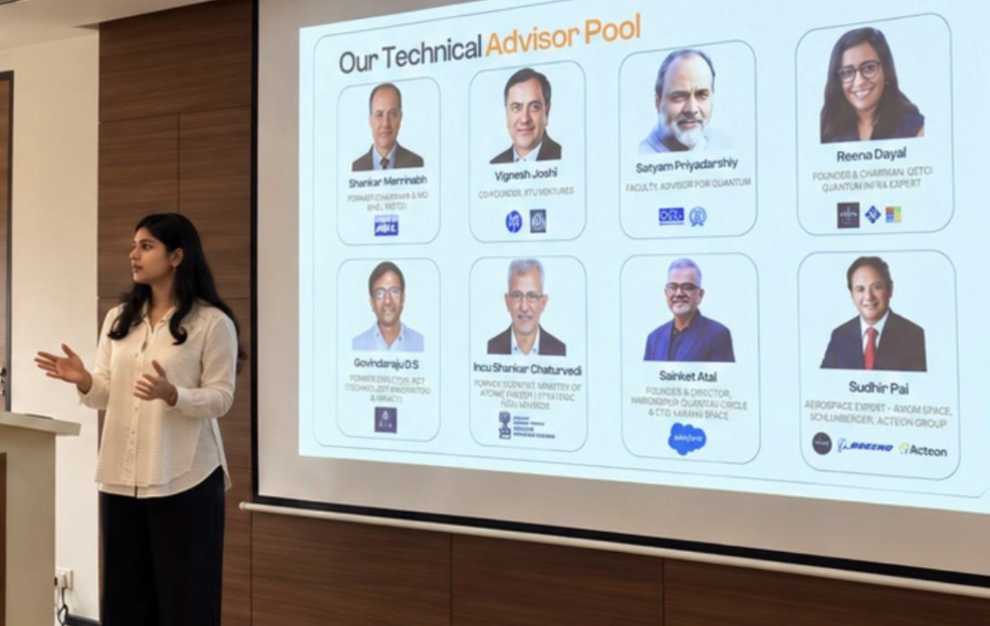
247VC’s partnership with ecosystem builders like CEO of SIIC, IIT Kanpur's Startup Incubation and Innovation Centre, brought the view from an institution that has taken more than 500 startups from lab bench to funded company. Dr. Amruta, Mission Coordinator for the National Quantum Mission, brought the view from inside India's most ambitious frontier science programme, where the country is deciding which deep tech bets it intends to own. Representation from MeitY brought the policy and procurement lens that determines whether the built hardware finds Indian demand.
This is the full support stack a hard tech company needs. The founders in attendance were building across various domains:
Electronics design and semiconductor tooling: Founders building EDA and verification tooling, written for a design community that currently rents every tool it uses from three foreign vendors.
AI for the physical world, and robotics: Perception and control stacks built for Indian operating conditions rather than ported from datasets collected somewhere cleaner.
Renewable energy and power systems: Founders treating energy not as a compliance line item and building solutions for generation, storage, conversion, and the power electronics.
Industrial IoT and the instrumentation layer: Sensing and telemetry hardware built to create datasets that do not currently exist anywhere, in any usable form. The people building the sensors are building the training data.
Enterprise tech, built on the ontology-first model: Software that constructs a decision layer over messy, sovereign, guarded enterprise data and then puts operators inside it. Shaped like Palantir, engineered for Indian and global enterprise constraints.
Genomics and computational life sciences: Pipelines compressing clinical interpretation timelines, and the infrastructure to do it on Indian population data, which remains among the most underrepresented and most commercially consequential genomic datasets on earth.
...and more across advanced manufacturing, defence-adjacent systems, and enterprise infrastructure.
What We Covered
Proliferation and contextualisation -
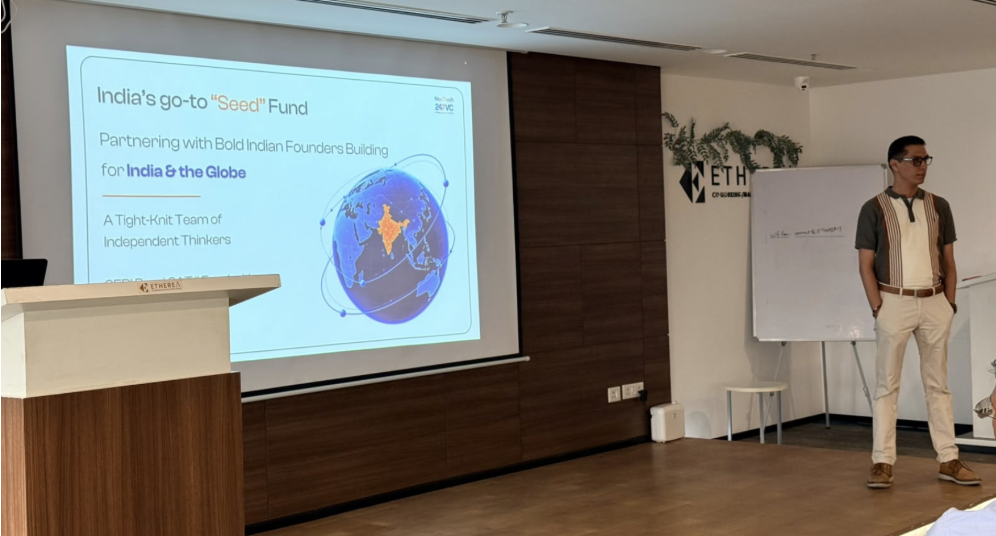
An EDA founder helping a robotics founder think through compute constraints, an industrial IoT founder reframing an AI company's data problem, and an energy founder showing why power electronics could become the bottleneck for the next generation of hardware companies. The ideas kept moving across categories, proliferating through the network in ways no single sector could have produced.
Themes emerging organically:
The geography lag is an ecosystem problem, not a talent problem: The technical density in the room would have been unremarkable in Bengaluru and was treated as surprising in Noida. That gap is a statement about where capital, science translators and policy makers have historically bothered to show up.
Design and manufacture want to be neighbours: Iteration cycles collapse when the people designing chips and the people packaging them are in the same room. Iteration cycles collapse. Yield conversations start earlier. Tooling gets written against real process constraints instead of datasheets. Several founders in the room are building for a supply chain that did not exist in this country five years ago and will be operational before their next product cycle closes.
Ontology before agents: The enterprise founders converged fast on a shared position: the AI layer is the commodity, the data model is the asset. Agents are only as good as the object graph they reason over. Whoever owns the ontology, the permissioning, and the workflow integration owns the account. Everyone else is reselling somebody else's inference.
Energy is the constraint everyone else is downstream of: Robotics needs power density. AI needs power at scale. Manufacturing needs power that is cheap and does not stop. The renewables founders in the room were having an input-cost conversation, and the hardware founders were listening very carefully.
The translation problem: With IIT Kanpur's incubation leadership present, the discussion turned to the hardest stretch in deep tech: the distance between a working lab result and a shippable, certifiable, manufacturable product. It is crossed by patient first institutional cheques, honest technical diligence, and investors who can read the data without needing it translated into a palatable format.
Real Signals, Not Just Introductions
The evening is only worth it if people leave holding something they did not walk in with:
A founder finds a customer: A buyer with the exact problem, two chairs away.
A builder finds a collaborator: The EDA founder and the robotics founder have more to say to each other than either expects. It is the pattern we saw at NexTech Hyderabad and NexTech NCR: the most valuable conversations happen across categories. Builders who know that some technical problems cannot be solved by throwing another hundred engineers at them.
Research finds a path to market: A lab result meets the company that can commercialise it.
Support finds the founder who needs it: An incubator head meets a founder whose gap is precisely what the institution exists to fill. We know what that pipeline produces. Dream Aerospace, an IIT Kanpur-incubated company building India's first green chemical propulsion system, is taking its thrusters through flight qualification on a ₹10 crore round 247VC led. Here is why we invested.
Investor logic without the pitch theatre: How a seed fund that underwrites physics thinks about defensibility, capital intensity and timing. The long version is covered in our thesis, Frontier Deep Tech: Rewiring India.Not just introductions for the sake of introductions. The right people, with the right context, at the right stage, asking the right questions.
Mumbai | NCR | Bengaluru | More Cities
Investing in technology companies requires genuine proximity to the people building them. 247VC is committed to taking these gatherings deeper and wider - different cities, different domains, the same high quality of conversation.
Be part of our tech community of developers, CTO’s, researchers and hardcore builders.
We are announcing Nextech Bengaluru soon!
Interested to join the next NexTech? RSVP for your City